


XYMOGEN
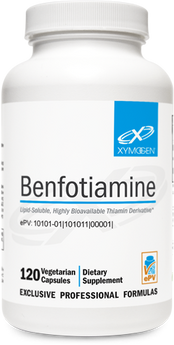
Benfotiamine 120 Capsules
Benfotiamine from XYMOGEN is a simple vitamin B1 support formula with 120 capsules and 300 mg per 2-capsule serving. It’s a single-ingredient option for targeted thiamin support.
Couldn't load pickup availability
One supplements rate per order, however many brands are in your bag.
- United States: $9 on orders under $100, $17.95 from $100.
- Canada: $14 on orders under $100, $22.95 from $100, on the products that ship there.
- Outside North America: a flat rate, shown at checkout. Import duties and taxes are paid by you.
- Lab test kits and a few large items add their own rate, shown at checkout.
An order can arrive in more than one package. We email tracking when it ships.
- Supplements: unopened and unused, with seals intact, can be returned if you ask within 14 days of delivery. Opened supplements can't be returned.
- To start a return, email hello@farmacy.com with your order number and wait for instructions before sending anything back. Return shipping is yours unless we made a mistake.
- Damaged, faulty or wrong item: email us your order number and a photo, and we'll arrange a replacement or refund.
- Lab test kits: refundable until they ship. After that a 15% restocking fee applies, and once your sample is being processed a refund may no longer be possible.
- Consultations aren't refundable. See the Cancellation & Rescheduling Policy.
Why People Use This
People often choose benfotiamine for:
- Nerve health support
- Healthy thiamin status
- Vascular health support
- Targeted B1 support without a full B-complex
How It Supports the Body
Benfotiamine is a lipid-soluble derivative of thiamin. It’s used to support healthy thiamin status and is commonly chosen for nerve and vascular health support.
It is commonly used to support:
- Healthy thiamin status
- Nerve health
- Vascular health
Matt's Take

I like simple products when there’s a clear reason to use them, and this is one of those. Benfotiamine is a focused option when you want standalone B1 support without adding a full B-complex.
What's Inside & Why It Matters
Per serving (2 capsules):
- Benfotiamine 300 mg
Why it matters:
- Benfotiamine is a lipid-soluble form of thiamin (vitamin B1) used to support healthy thiamin status, nerve health, and vascular health.
Other ingredients:
- Microcrystalline cellulose
- Capsule (hypromellose and water)
- Ascorbyl palmitate
- Silica
- Medium-chain triglyceride oil
Made without:
- Wheat
- Gluten
- Corn
- Yeast
- Soy
- Animal and dairy products
- Fish
- Shellfish
- Peanuts
- Tree nuts
- Egg
- GMO-derived ingredients
- Artificial colors
- Artificial sweeteners
- Artificial preservatives
Label notes:
- Serving size: 2 capsules
- Suggested daily use: 2 capsules twice daily
- Full labeled daily amount: 600 mg benfotiamine
How to Use It
Directions:
- Take 2 capsules in the morning and 2 capsules in the evening, or as directed by your healthcare professional.
Helpful math:
- 4 capsules per day = 600 mg benfotiamine daily
- 120 capsules per bottle = 30 days at the full labeled use
- 2-capsule serving size = 60 servings per container
Important Information
- Consult your healthcare professional prior to use.
- Individuals taking medication should discuss potential interactions with their healthcare professional.
- Do not use if tamper seal is damaged.
- Keep tightly closed in a cool, dry place.
- Keep out of reach of children.
Common Questions
Is this just vitamin B1?
It provides vitamin B1 support in the form of benfotiamine, which is different from standard thiamin hydrochloride.
How much benfotiamine is in each capsule?
150 mg per capsule.
How long does one bottle last?
At 4 capsules daily, one bottle lasts 30 days.
Is this a B-complex?
No. It is a single-ingredient benfotiamine formula.
Why does the bottle say 120 capsules but only 60 servings?
Because one serving is 2 capsules.
Is the labeled daily amount 300 mg or 600 mg?
The Supplement Facts lists 300 mg per 2-capsule serving. The suggested use is 2 capsules twice daily, for 600 mg per day.
Is it free of common allergens?
It is made without many common allergens, including gluten, soy, dairy, egg, peanuts, tree nuts, fish, and shellfish.
Still need help choosing?
Two questions can point you to a condition guide. For individual guidance, explore a discovery call.


